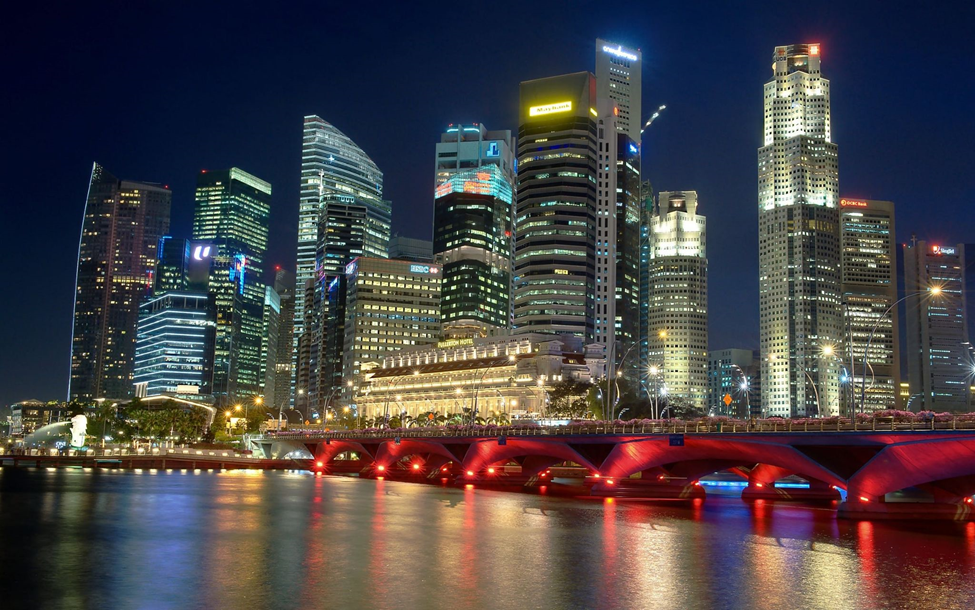

The latest data from World Bank shows that Singapore ranked 18th globally and 2nd in Asia for ease of doing business. Government policies, the social and economic state of a country are what build up the business environment. Reviewing corporate taxes, business expenses, and valuation of a business, we can understand the business environment of Singapore.
Taxes
Since the year of assessment 2010, Singapore settled on a flat corporate tax rate of 17% for both resident and non-resident businesses. This rate was determined to be a friendly rate to attract and retain global investors. However, the Corporate Income Tax (CIT) rate of 17% in Singapore is still one of the lowest globally. In addition, the Internal Revenue Authority of Singapore also offers certain tax incentives like tax rebates, tax exemptions, etc., to corporate organizations that meet the requirements of such benefits.
Tax Exemption
The IRAS offers a 75% tax exemption to newly incorporated companies on the first $100,000 of chargeable income earned by a company for the first three tax filing years. There are, of course, certain conditions that these companies have to meet to qualify for this incentive.
These conditions are:
- The company must be incorporated in Singapore;
- The company has to be a tax resident of the country; and
- At least an individual shareholder owns at least 10% of shares and not more than 20 shareholders.
A newly incorporated company is also eligible for a further 50% tax exemption on $100,000 for the first three tax filing years. Any taxable income above $100,000 will be charged at the normal rate of 17%.
These tax exemptions reduce the tax rate to 8.5% for newly incorporated firms in Singapore.
Tax Rebate
The IRAS first adopted the corporate income tax rebate in the year of assessment 2013. From the year of assessment 2013 – 2015, the CIT rebate was 30% and capped at $30,000. This increased significantly in the year of assessment 2016 to a 50% tax rebate which capped at $20,000. By the year of assessment 2020, the tax rebate had reduced to 25% and capped at $15,000. A non-resident company will not derive the CIT rebate as they are subject to final withholding tax.
Expenses
Business or corporate expenses are expenses incurred in the daily course of running a business. They apply to all sizes of organizations, both small and large corporations—the IRAS groups business expenses as deductible and non-deductible. When business expenses are deductible, they reduce taxable income and the amount of tax paid.
Deductible Expenses
These are expenses that are incurred wholly in the generation of income. Therefore, they are not a contingent liability and are not classified as business capital. Therefore, these expenses are not prohibited from deduction under the Income Tax Act of Singapore.
Non-Deductible Expenses
These are expenses that a business pays for that does not directly apply to the running of the business. This includes capital expenses such as incorporation expenses and expenses incurred on purchasing fixed assets and personal expenses such as travel and entertainment. Read some more examples of deductible and non – deductible here.
Singapore is ranked at the top when it comes to the business environment because of the low taxes associated with businesses and ease of entering the business scene. Still, when it comes to running costs, they are one of the highest. The cost of living in Singapore is generally high, and by 2017, there was a 30% increase in the cost of water, diesel, and a proposed carbon tax imposed on businesses. This increase in major costs caused slight inflation and increased the cost of business operation in Singapore, but Singapore remains competitive and continues to attract global investors.
Valuation


Business valuation is a non-linear and non-mechanical process dependent on the foresight and insight of circumstances surrounding a valuation. Businesses seek a valuation for the following reasons:
- To be able to negotiate competitively during mergers and acquisitions;
- Prepare for unforeseen circumstances;
- Preserve the value of the business; and
- Avoid disputes with buyers
The valuation takes into account the assets and liabilities of a business. Understanding the value of a business is keys to making better strategic and intelligent business decisions. The valuation of your company can be done by accountants, corporate investors, external auditors, etc.
In Singapore, business valuation has gained prominence because of some major developments. These are the rise in arbitration and litigation proceedings due to commercial and shareholders’ disputes and the growing knowledge on the importance of intellectual property in business. In addition, they comply with stock exchange requirements and have seen some growth in recent years, thus increasing the need for the valuation of businesses in Singapore
Conclusion
The business environment in Singapore is highly competitive because of the ease of entering the country’s business environment as a new corporation, which has significantly improved the economy. In addition, the benefits of building a business in Singapore are a significant factor that has helped attract foreign investors to the country. As a production company, the business expenses may be high. This is because the cost of essential production materials like water and diesel has experienced slight inflation in recent times. Also, the general cost of living in Singapore is high. However, the tax benefits have cushioned the effect that those high costs will have caused to a business. Lastly, mergers and acquisitions have become significantly popular to increase the productivity of businesses. Hence valuation of a business by qualified personnel is very important.