

Over the years, Singapore has become a top spot destination for startup businesses and enterprises. According to the World Bank’s published findings, the country is one of the best places to run and grow your business. From the great political structure to an effective policy design and execution framework, businesses have what they need to thrive well. However, know that this is not automatic, as your success may also be largely determined by how much you know.
Essentially, Singapore’s tax allocation regime is one of the most exciting for business owners. Its relatively low tax rate is likely why foreign investors would choose the country over other Asian giants like Japan, or China. Currently, Singapore has a 17 per cent corporate tax rate on businesses with profit returns above 200,000 SGD. However, small businesses with returns less than or equal to 200,000 SGD are required to pay only 83 per cent as tax.
As a small business owner or manager, knowing the important tax laws could help your business planning. In this article, we will give insights into the corporate tax laws that affect small businesses operating in Singapore.
The income tax act and what you need to know
There are several tax laws and policies that affect people’s businesses in various ways. Hence, the reason why some businesses may qualify for certain tax exemptions, while others may not. In Singapore, the Income Tax Act stipulates what individuals and corporate bodies should pay as tax. It also states if there are preferential measures or benefits for any of the defined entities that should pay tax.
This means that as new or intending small-scale business owners, you should be conversant with the Income Tax Act sections. Primarily, the Act indicates that corporate tax should be levied on all businesses whose income is partly or wholly generated within the country. On the other hand, this tax is also levied on companies or businesses that bring remittances into the country.
However, there are two classifications for companies that should pay the corporate tax:
- Tax-resident businesses
These are companies whose control and management was domiciled in Singapore for the period for which the government considers the tax payment. By this, the tax authorities classify your company as a tax-resident firm. This applies if you had such things as the executive board meetings or annual general meetings held in Singapore (for the period under consideration).
This period under consideration is generally termed the Year of Assessment (YA). After every twelve calendar months, the government will count the timeframe from the first day of a calendar year.
Businesses that fall under this category enjoy tax exemptions or reductions in certain instances. Essentially, they may enjoy “avoidance of double taxation” on certain incomes. For instance, tax-resident businesses do not have to pay taxes on funds from a foreign country. However, they must have paid taxes to the income-generating countries. Also, this is only valid if the foreign country has a corporate tax rate policy that is not less than 15 per cent.
If you run an international business model- as described here, you should ensure that your business trades in countries that have signed an avoidance of double taxation agreement (DTA) with Singapore. This is important as it means you wouldn’t have to pay taxes in those countries if you have proof of tax payment in Singapore.
Another important benefit for tax-resident small business startups in Singapore is the country’s tax exemption program designed for startup businesses. In this scheme, startups enjoy different tax per cent reductions on taxable income for the first three years of assessment.
- Non-tax-resident businesses
Unlike in the tax-resident businesses, non-tax-resident businesses do not have their businesses controlled and managed in Singapore. These businesses are subject to withholding taxes, and they are less likely to enjoy tax exemptions than their tax-resident counterparts.
This means there is a charge on every interest and royalty made on non-tax-resident businesses. The law requires them to pay taxes on rentals issued out on movable assets and every other fee or payment that they directly benefit from.
However, just as tax-resident companies, this category of businesses are exempted from paying taxes on capital gains. Also, since Singapore operates a single-tier tax system, business shareholders are exempted from tax on profit returns- once the company has paid allocated taxes.
Other tax laws that may concern your small scale business
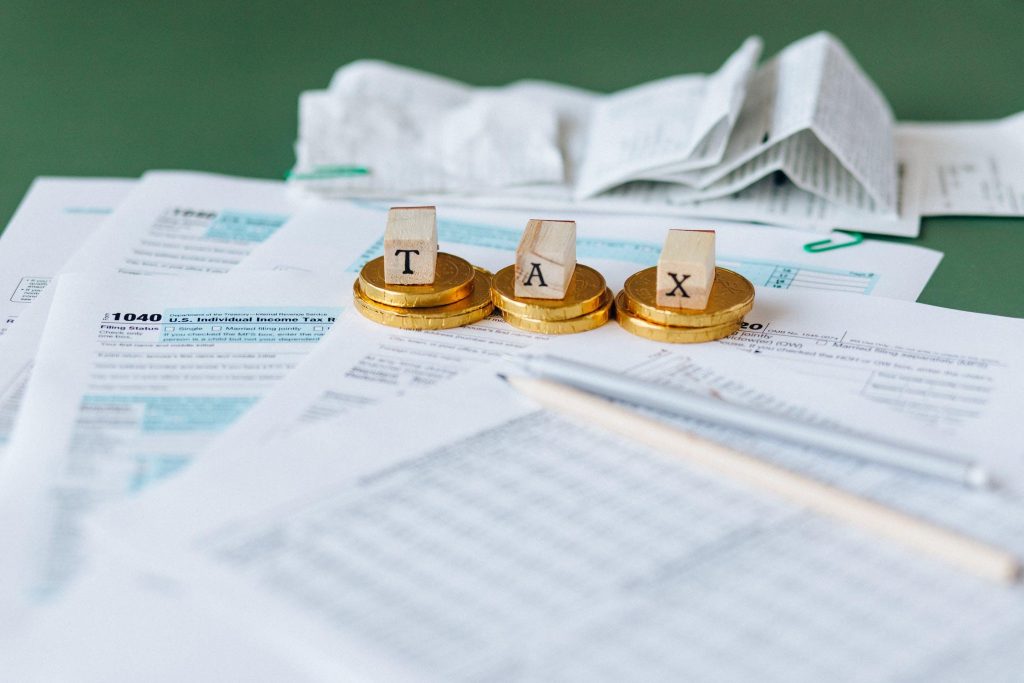
Asides from the corporate taxes on profit returns, other taxes may concern your business- depending on what it does and the operational structure.
Most businesses must pay property tax irrespective of whether they are occupying their buildings or a rented one. Property tax is 10 per cent of the annual value estimate of the property concerned. However, non-owner-occupied properties usually incur more tax percentages than owner-occupied ones.
Additionally, small businesses may have to pay goods and services tax (GST), foreign worker levies, and a few other applicable taxes.
Note that ideally, documents for your business’s corporate taxes are expected to be filed by December 15 of every YA. Initially, businesses could also file these documents at the Internal Revenue Authority of Singapore (IRAS) office by November 30 of every YA. However, physical filing is not supported, leaving businesses to use the online filing method faster and efficiently.
Importantly, knowledge of the tax laws gives you insights on how to strategize and plan well for business scaling and growth. Asides from that, this also helps you know what to do to stay off trouble with the (IRAS). Navigating these laws as a small business owner can be confusing. You might need to consult a tax expert to help simplify some terms and make it easy for you to make payments on time.